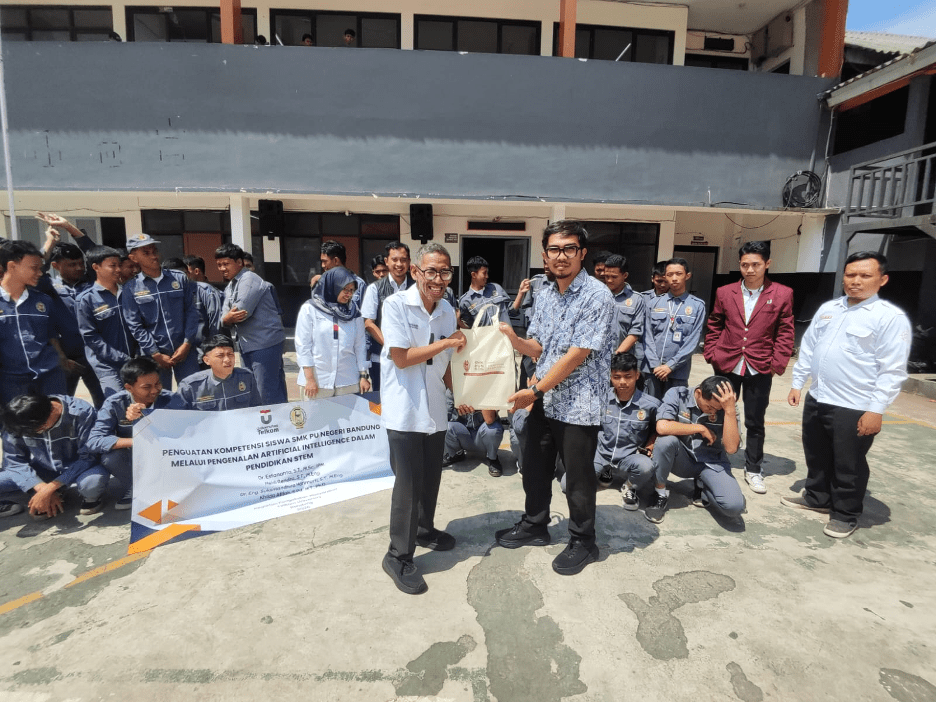
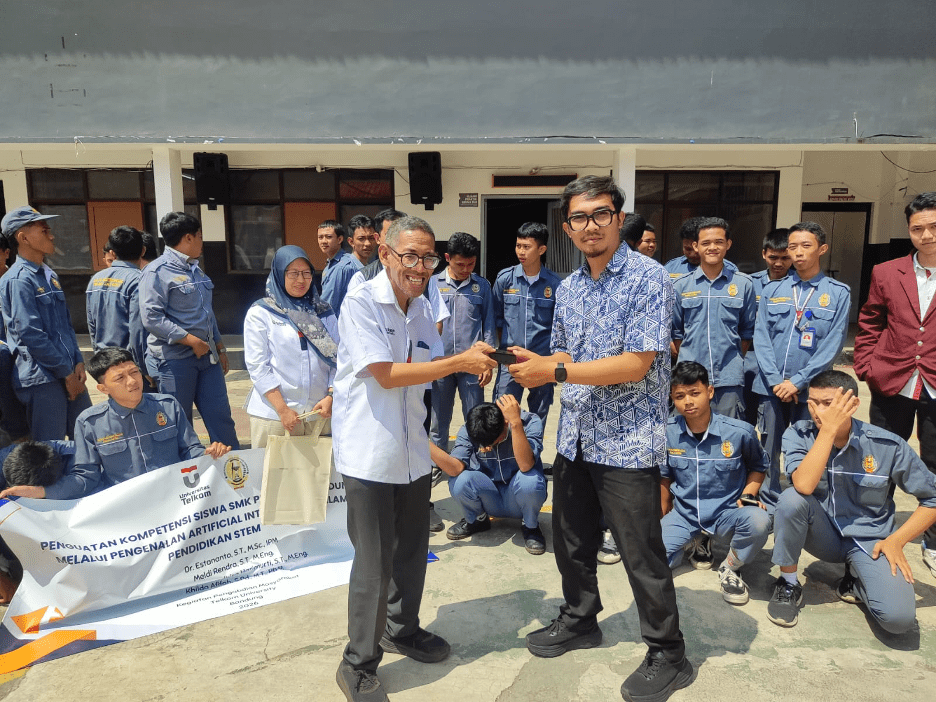
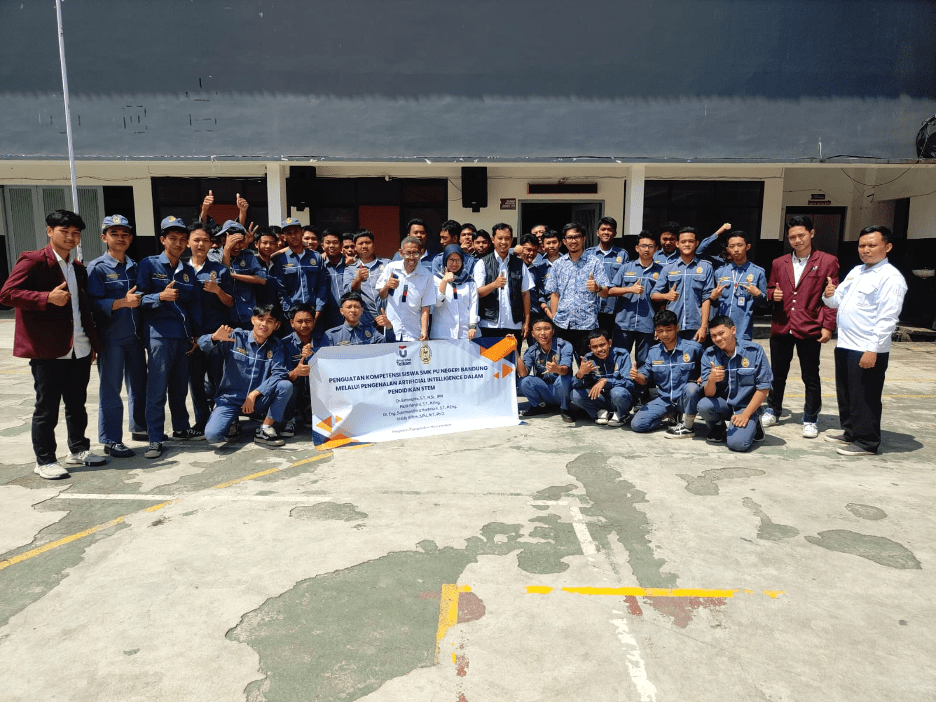
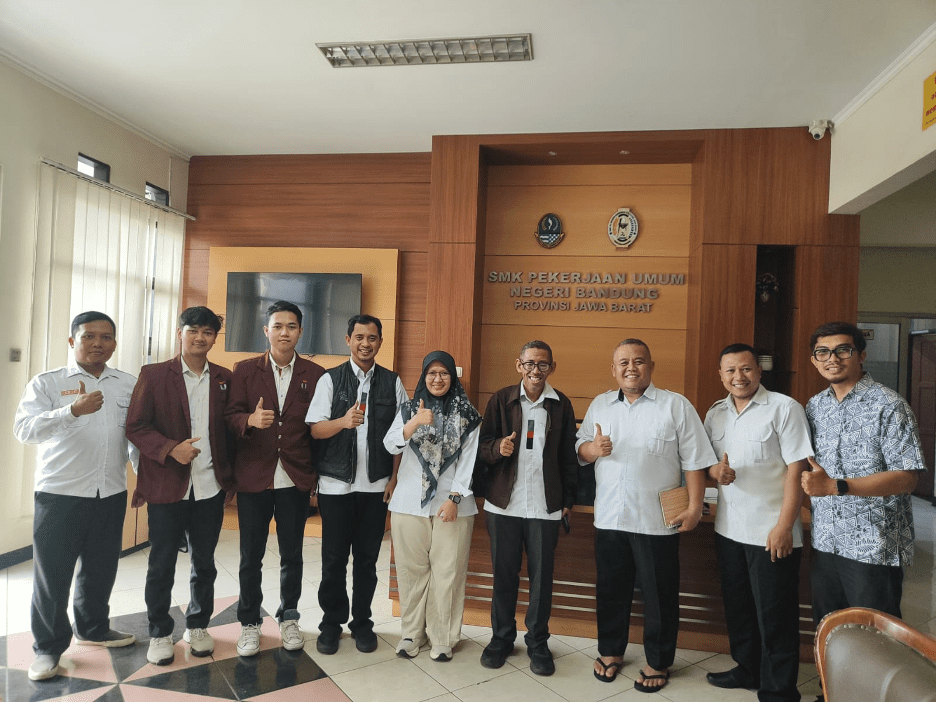
Bandung — Telkom University, through its community service program, conducted a training activity at SMKN PU Bandung to strengthen students’ competencies in STEM education through the introduction of Artificial Intelligence (AI) technology. The program focused on practical learning in object detection using machine learning, Google Colab, and Raspberry Pi 4 as an accessible edge computing device.
The activity was carried out by a community service team from Telkom University, consisting of Khilda Afifah, Suksmandhira Harimurti, Meldi Rendra, and Estananto, with support from Telkom University students, namely Ervan Fahri Adriansyah Wahab and Rafhan Mazaya Fathurrahman. From SMKN PU Bandung, the activity was accompanied by Dadi Hardiansyah and Okta Brilian as teacher representatives who supported the coordination and implementation of the training at the school.
This community service activity was motivated by the need for vocational students to gain more practical exposure to modern technologies, especially in the field of artificial intelligence, computer vision, and object detection. In the Industry 4.0 era, vocational education is expected not only to provide theoretical knowledge but also to equip students with hands-on skills that are relevant to industrial needs.
During the activity, students were introduced to the basic concepts of artificial intelligence, machine learning, computer vision, and real-time object detection. The training also demonstrated how an AI system can recognize objects through camera input using a pre-trained YOLO11n model. The system was designed to be affordable, responsive, and suitable for learning environments, making it easier for students to understand how AI can be applied in real-world situations.
One of the main learning focuses was the use of Google Colab as a cloud-based platform for introducing AI experimentation and model training workflows. This approach allowed students to explore artificial intelligence without being limited by the hardware specifications of their personal devices. Students were also introduced to Python-based programming, the Ultralytics library, and the basic workflow of preparing datasets for object detection.
The training also highlighted the potential application of AI in occupational safety and health. Students were introduced to object detection cases related to Personal Protective Equipment (PPE), such as hard hats, safety vests, goggles, and gloves. This topic was considered highly relevant for vocational students because it connects artificial intelligence technology with workplace safety awareness and industrial practice.
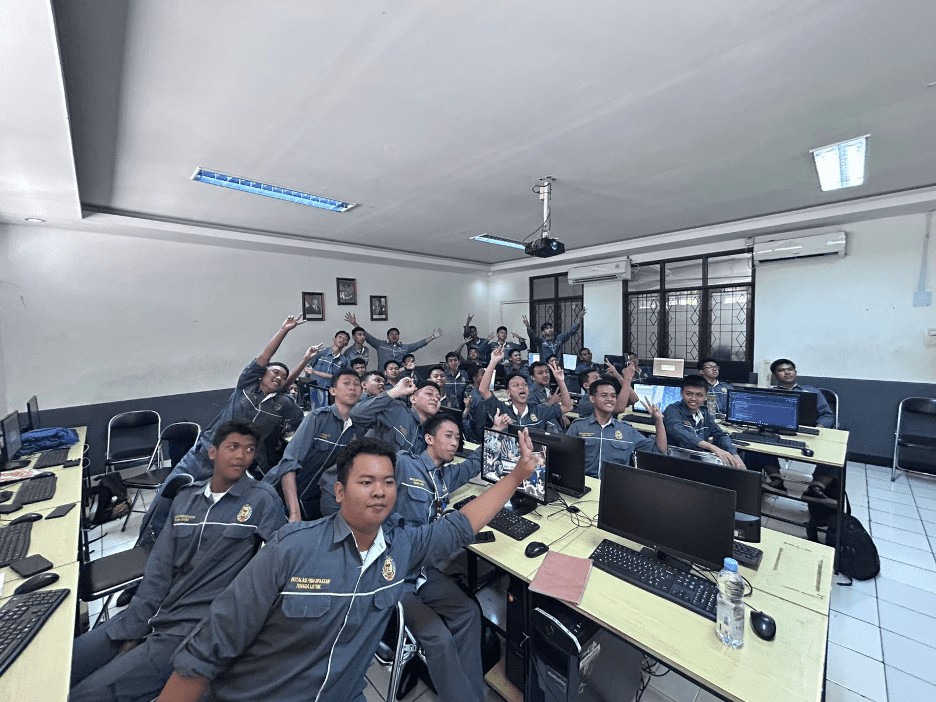
The hands-on session became one of the most engaging parts of the activity. Students practiced running real-time object detection using webcam input through Google Colab. The YOLO11n model was able to detect common objects in the classroom environment, such as persons, chairs, books, and computers. Through this activity, students gained direct experience in observing how AI systems process visual data and generate detection results in real time.
The activity also introduced the concept of edge computing through the use of Raspberry Pi 4. By using this device, students were able to understand that AI systems can be implemented not only on high-performance computers or cloud platforms, but also on compact and affordable devices. This provided students with a clearer understanding of how AI-based systems can be developed for practical applications in schools, laboratories, and industrial environments.
The evaluation results showed that the activity received a very positive response from both students and accompanying teachers. Based on the participant satisfaction survey, the percentage of responses in the “Agree” and “Strongly Agree” categories reached 86.67%. Participants stated that the material was relevant, easy to understand, and useful for improving their knowledge of modern technology.
Although the participants showed high enthusiasm, the activity also identified several challenges, particularly in understanding basic Python programming and the logic behind machine learning workflows. This indicates that further mentoring is needed so that students can develop stronger programming foundations and eventually design AI-based systems independently.
Overall, this community service activity successfully introduced practical artificial intelligence technology to students of SMKN PU Bandung. The integration of Google Colab, YOLO11n, Raspberry Pi 4, and object detection practice provided an applicable learning experience that supports STEM education in vocational schools. The program is expected to become a foundation for further collaboration, especially in the development of integrated smart systems, Internet of Things implementation, and real hardware-based AI applications.